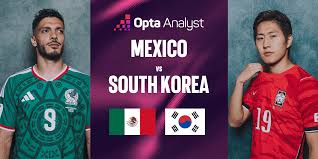
When you think of Mexico and South Korea, what comes to mind? Perhaps a thrilling World Cup match, the global phenomenon of K-pop, or the growing economic partnership between two dynamic nations. The relationship between Mexico vs South Korea is far more complex and interesting than most people realize.
Whether you’re a football fan looking for match analysis, a traveler curious about cultural connections, or someone interested in international relations, this guide covers everything you need to know about the Mexico vs South Korea dynamic. We’ll explore their football rivalry, historical encounters, cultural exchanges, and economic ties.
Let’s dive into the fascinating story of two countries—separated by over 12,000 kilometers but connected by surprising bonds.
Mexico vs South Korea: Football Rivalry
The Mexico vs South Korea football rivalry has produced some memorable World Cup moments. While these two nations don’t face each other regularly, when they do, the matches are often dramatic and high-stakes.
Head-to-Head Record
Looking at the full history of Mexico vs South Korea encounters, the record is relatively balanced but leans slightly in Mexico’s favor:
- Total matches: 9 meetings at the national team level
- Mexico wins: 4
- South Korea wins: 3
- Draws: 2
Mexico is unbeaten in their last four encounters with South Korea, including three wins and one draw. The most recent meeting was a 2-2 friendly draw in September 2025.
World Cup Encounters
The Mexico vs South Korea World Cup history is particularly interesting. They’ve met twice on football’s biggest stage:
South Korea has never beaten Mexico at a World Cup. However, they came close in 2018, and the match was tightly contested until the final whistle.
The 2026 World Cup Showdown
The most anticipated Mexico vs South Korea match in recent memory took place on June 19, 2026, at Estadio Akron in Guadalajara, Mexico. This Group A clash had major implications for both teams’ World Cup campaigns.
Match Context:
- Both teams entered the match with 3 points from their opening games
- Mexico had beaten South Africa 2-0
- South Korea came from behind to defeat the Czech Republic 2-1
Key Storylines:
- Mexico’s Home Advantage: Playing as co-hosts, Mexico had passionate home crowd support. However, they were without key defender César Montes due to suspension.
- South Korea’s “Second Match Curse”: Before this tournament, South Korea had never won a second group-stage match in World Cup history, with 7 losses and 4 draws across 11 tournaments.
- Individual Brilliance: The match pitted Mexico’s speed against South Korea’s composure. Son Heung-min, Lee Kang-in, and Hwang Hee-chan posed serious threats on the counter-attack, while Raúl Jiménez was Mexico’s aerial danger man.
Tactical Battle:
Mexico typically favors possession-based football, pushing their full-backs forward to support attacks. South Korea tends to absorb pressure and hit on the break, using the pace of Son Heung-min and Hwang Hee-chan to exploit space behind the defense.
The midfield battle was crucial. South Korea’s Lee Kang-in, who completed every pass in the opening match, was identified as the key to unlocking Mexico’s defense. Meanwhile, Mexico’s Edson Álvarez was expected to drop into defense to cover for the suspended Montes.
Key Matchups:
- Kim Min-jae (South Korea) vs Raúl Jiménez (Mexico)
- Lee Kang-in (South Korea) vs Mexico’s midfield
- Son Heung-min (South Korea) vs Mexico’s right flank
Many experts predicted a narrow Mexico victory, but acknowledged South Korea’s ability to spring surprises.
Beyond Football: Cultural Connections
The Mexico vs South Korea relationship goes far beyond the football pitch. South Korean culture has taken Mexico by storm in recent years, creating one of the world’s more unlikely cultural love affairs.
The Hallyu Wave in Mexico
The Korean cultural phenomenon, known as Hallyu, has made significant inroads into Mexican society. K-pop, K-dramas, and Korean entertainment have developed a passionate following among Mexican youth.
Key Drivers:
- K-pop: Groups like BTS and Stray Kids have massive Mexican fanbases. Tens of thousands of fans gathered in Mexico City for a BTS concert in May 2026.
- Korean Food: Korean cuisine has gained popularity, with Korean restaurants appearing in major Mexican cities.
- Language Learning: Many young Mexicans are learning Korean, driven by interest in entertainment and culture.
The Mixed Emotions of World Cup:
Despite deep cultural appreciation, the Mexico vs South Korea World Cup match created a unique dilemma. Many Mexican K-pop fans found themselves torn between their love for Korean culture and their national pride.
As one young Mexican K-pop fan put it: “It’s going to be a bit uncomfortable.” Meanwhile, South Korean visitors in Mexico have been greeted with chants of “Korean, my brother, you’re now Mexican.”
Historical Connections
The Mexico vs South Korea relationship has deeper historical roots than many realize. Mexican henequen plantations once employed Korean indentured workers, creating early cultural exchanges between the two nations.
Today, an academic thesis explores “South-South solidarities” between Mexico and South Korea, examining how these two countries—both developing nations with complex histories—have formed connections through labor, language, and cultural exchange.
Economic and Diplomatic Ties
The Mexico vs South Korea partnership extends to trade, investment, and diplomacy. South Korea is Mexico’s largest trading partner in Central and South America.
Trade and Investment
- Major Korean Companies: Kia and other Korean corporations have established significant operations in Mexico, particularly in the industrial hub of Monterrey.
- Supply Chain Integration: Thousands of South Koreans live and work in Mexico, contributing to local economies and creating cross-cultural business relationships.
- Strategic Dialogue: The two countries agreed to establish a new strategic dialogue mechanism to strengthen economic relations and prepare for the USMCA (T-MEC) review process.
Growing Cooperation:
Mexico and South Korea have also deepened cooperation in international development. Joint projects are being explored in:
- Ecological restoration in the Great Maya Forest
- Food security through agricultural innovation
- Circular economy and sustainable development
Diplomatic Engagement
The leaders of both countries have engaged in high-level dialogue. South Korean President Lee Jae Myung held a phone call with Mexican President Claudia Sheinbaum Pardo to discuss:
Sheinbaum extended an invitation for Lee to visit Mexico, signaling warming relations between the two nations.
International Cooperation
Mexico and South Korea work together in multilateral forums including:
- MIKTA: A partnership between Mexico, Indonesia, South Korea, Turkey, and Australia
- Development Cooperation: Joint projects through KOICA (Korea International Cooperation Agency) and AMEXCID (Mexican Agency for International Development Cooperation)
Mexico vs South Korea: What Makes This Relationship Unique
The Mexico vs South Korea connection is unusual for several reasons:
- Geographical Distance: Separated by 12,000 kilometers and a 15-hour time difference, the two countries shouldn’t have much in common.
- Cultural Fusion: Despite language barriers, Korean entertainment has found a passionate Mexican audience, creating a unique cultural bridge.
- Economic Synergy: Korean manufacturing expertise meets Mexican production capacity in a mutually beneficial partnership.
- Friendly Rivalry: Even in competition (like the World Cup), the relationship remains largely positive, with both countries expressing mutual respect.
Frequently Asked Questions
Q1: Which country has a better head-to-head record in football, Mexico or South Korea?
Mexico holds a slight edge with 4 wins compared to South Korea’s 3 wins in their 9 meetings. Mexico is also unbeaten in their last four encounters.
Q2: Have Mexico and South Korea met in a World Cup before?
Yes, they’ve met twice in World Cups. Mexico won 3-1 in 1998 and 2-1 in 2018. They also faced each other in the 2026 World Cup group stage.
Q3: Why is Korean culture so popular in Mexico?
K-pop, K-dramas, and Korean entertainment have gained a massive following in Mexico, particularly among young people. Korean companies investing in Mexico have also contributed to cultural exchange.
Q4: Do Mexico and South Korea have strong economic ties?
Yes. South Korea is Mexico’s largest trading partner in Central and South America. Major Korean companies like Kia have significant operations in Mexico, and both countries are exploring a free trade agreement.
Q5: How do Mexicans feel about South Korea despite the football rivalry?
Mexicans generally have positive feelings toward South Korea, appreciating the culture, food, and people. The relationship is described as “brotherly,” with mutual respect even during competition.
Q6: What challenges do Mexico and South Korea face in their relationship?
Key challenges include maintaining economic cooperation amid global trade uncertainties like the USMCA review, and navigating the complexities of cultural exchange while respecting both nations’ identities.
Conclusion
The Mexico vs South Korea relationship is a fascinating case study in how two seemingly distant nations can forge meaningful connections. From World Cup battles that test each other’s mettle, to cultural exchanges that bring people together, to economic partnerships that benefit both countries—Mexico and South Korea have built a relationship that defies geography.
Whether you’re cheering for El Tri in Guadalajara or supporting the Taegeuk Warriors in Seoul, there’s something genuinely special about the bond between these two nations. It’s a relationship built on respect, shared interests, and a willingness to learn from each other.
As the 2026 World Cup group stage showed, Mexico vs South Korea matches are never just about football. They’re about the connections—both old and new—that make international relationships so rich and meaningful. And that’s something worth celebrating.